
11 Money Mistakes New Homeowners Make (And How to Avoid Them)


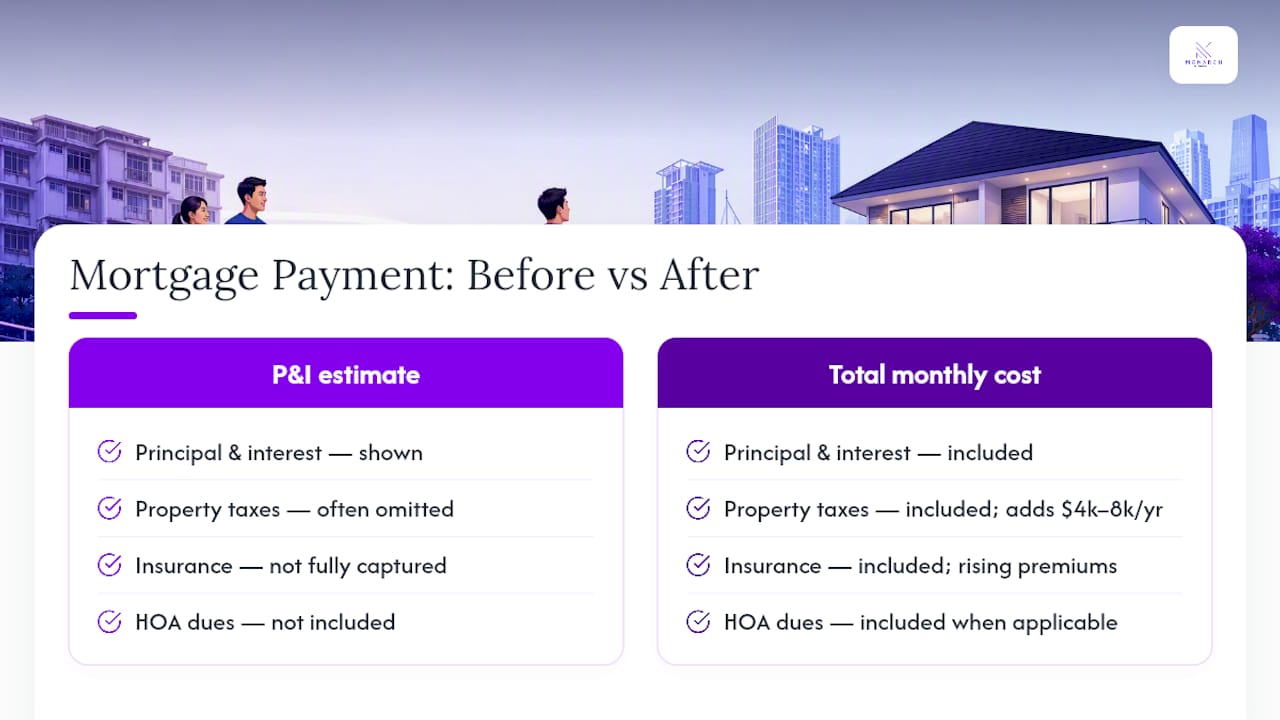
The single biggest financial trap new homeowners fall into is confusing the mortgage payment with the actual cost of owning a home. Lenders qualify you based on principal and interest, but they don’t account for property tax reassessments, rising insurance premiums, HOA dues, or the maintenance bills that start landing within weeks of closing. Mortgage Solutions notes that this gap between pre-approval and total ownership cost is what pushes so many buyers into “house-poor” territory before their first anniversary.
Three moves stop the bleeding immediately. First, build a full first-year budget that includes taxes, insurance, HOA fees, and a maintenance line, not just your mortgage statement. Second, protect your emergency fund. The National Association of Realtors and most financial planners recommend keeping three to six months of expenses untouched even after a down payment drains your savings. Third, if you’re still under contract, get an independent inspection before you sign anything final. At Monarch Carpenters, we’ve watched enough renovation projects start with a homeowner discovering a problem they wish they’d caught earlier.
Do these today:
Open a separate “home first-year” savings account and fund it before you touch discretionary spending.
Document every contractor’s payment terms in writing, including milestones and retainage, before work starts.
Schedule an independent inspection now if your closing hasn’t happened yet. Skipping this is one of the most common new homeowner contract mistakes on record.
Key Takeaways
New homeowner spending mistakes cluster around three failures: underestimating total ownership costs, releasing money before work or inspections are verified, and spending on furnishings before securing an emergency fund.
Point | Details |
Budget beyond the mortgage | Include taxes, insurance, HOA, and escrow adjustments in a full first-year forecast. |
Protect your reserves | Keep three to six months of expenses untouched even after a down payment. |
Use milestone payments | Tie every contractor disbursement to a documented deliverable, with 5%–10% retainage held back. |
Delay big purchases | Wait two to three months before furnishing beyond essentials to avoid impulsive overspending. |
Inspect before you sign | Independent inspections at pre-drywall and final walkthrough catch defects contracts often waive. |
Table of Contents
Common New Homeowner Spending Mistakes Ranked by Cost Impact
New homeowner financial pitfalls tend to follow a predictable pattern, and most of them are avoidable once you know what to watch for. Here are the mistakes that cost the most, in roughly the order they hit your wallet.
1. Underestimating total cost of ownership. Property tax reassessments after a sale, escrow adjustments, and rising insurance premiums can add hundreds of dollars to your monthly payment within the first year. The fix: request a full escrow projection at closing and build a 12-month cash-flow forecast, not just a mortgage estimate.
2. Depleting your emergency fund at closing. Down payments and closing costs tempt buyers to empty their savings. Keep a sufficient emergency fund untouched, separate from your down payment fund.
3. Skipping or misreading inspections. New-construction contracts often limit inspection rights and include large, forfeitable deposits. Fine Print Homes explains that buyers of new builds frequently sign away protections resale buyers take for granted. Fix: hire an independent inspector for pre-drywall and final walkthroughs regardless of what the builder’s contract allows.
4. Overspending on furniture and appliances immediately after move-in. AOL Finance reports that impulsive, high-end purchases in the first weeks are among the costliest and least necessary expenses new owners take on. Wait two to three months before furnishing beyond the essentials.
**5. On a $400,000 home, that’s $4,000 to $8,000 annually, not a one-time expense.
6. Buying extended warranties without reading the exclusions. Home warranty plans often exclude pre-existing conditions or specific appliance brands. Read the fine print before paying for coverage you may never use.
7. Contractor payment errors. Large up-front deposits with no retainage and vague deliverables are the leading cause of construction disputes, according to Hollington Law Firm. Tie every payment to a documented milestone instead.
8. Ignoring HOA reserve funds. A thin reserve fund means a special assessment could land on your doorstep with little warning. Request the HOA’s reserve study before closing, not after.
9. Taking on new debt or big purchases before closing. Financing a car or opening a new credit card between pre-approval and closing can derail your loan. Shop multiple lenders early and freeze major purchases until after you have keys.
10. Ignoring utility and seasonal expense spikes. Landscaping, pest control, HVAC servicing, and seasonal utility swings catch new owners off guard because rentals rarely require budgeting for them.
11. Forgetting tax benefits and long-term improvement costs. Many new owners miss mortgage interest deductions or fail to set aside funds for gradual personalization projects, treating every upgrade as an emergency expense instead of a planned one.
Pro Tip: *Never release a full contractor payment until the work passes inspection.
Build a Simple First-Year Homeownership Budget
A workable budget separates fixed costs from the surprises that hit new owners hardest. Here’s a sample breakdown for a hypothetical $400,000 home, meant to show scale, not to match your exact numbers.
Family Handyman warns that escrow recalculations and tax reassessments routinely raise monthly payments after the first year, so stress-test your budget before you rely on it.
If either scenario forces you to skip a bill, your discretionary spending needs a smaller cap.
Open a dedicated savings bucket for first-year home costs and automate a monthly transfer into it.
Sort every expense into one-time versus recurring before you spend, so a $3,000 sofa doesn’t quietly compete with your property tax bill.
Contractor Payments, Contracts, and Clauses to Check First
Before signing any renovation or construction contract, read for these clauses: inspection rights, deposit and forfeiture language, financing contingencies, arbitration or venue requirements, material-substitution terms, and completion timelines. These are where common new homeowner contract mistakes originate, and they’re often buried in boilerplate.

This structure, outlined by Hollington Law Firm, protects you from paying for work that isn’t finished correctly.
Always pay by traceable transfer, never cash, and tie every disbursement to a documented deliverable or passed inspection. At Monarch Carpenters, our design-build process is built around milestone billing precisely because it keeps clients and craftsmen aligned from the first sketch to the final walkthrough, and it’s a habit we’d recommend to any homeowner working with any contractor.
Confirm your contract specifies exact payment percentages tied to inspection sign-offs, not calendar dates.
Avoid deposits above 10% to 15% of total project cost.
Check for reciprocal attorney-fee language so you’re not the only party penalized in a dispute.
Pro Tip: Negotiate for a reciprocal attorney-fees clause. If your contract only penalizes you for legal action, that’s a red flag worth pushing back on before you sign.
Pre-Signing Checklist for Purchase and Renovation Contracts
Run through this list before you sign anything, whether it’s a purchase agreement or a renovation contract.
Confirm the deposit is escrowed or backed by a surety bond, not held directly by the seller or contractor.
Schedule an independent inspector for pre-drywall and final walkthroughs, especially on new construction.
Review financing contingency deadlines and arbitration or venue clauses line by line.
Request the HOA’s reserve fund study and recent meeting minutes before closing.
Verify insurance coverage, including flood risk if your property sits in or near a flood zone.
Confirm you have a documented funding plan for the first year, separate from your down payment.
Review renovation stage timelines before approving any milestone-based project.
Why Modest, Milestone-Driven Design Choices Beat Big Splurges
The conventional advice tells new homeowners to “budget carefully” and leave it there, which is about as useful as telling someone to “drive safely.” The real failure isn’t a lack of awareness. It’s sequencing. Homeowners spend on visible things first, like furniture, landscaping, a kitchen refresh, because those purchases feel like progress. Meanwhile the invisible costs, escrow shortfalls, HOA assessments, deferred maintenance, quietly compound in the background until they force a crisis.
What gets overlooked is that good design and good budgeting aren’t in tension. A well-planned renovation, done in phases with milestone payments and clear deliverables, almost always costs less over three years than a rushed, all-at-once overhaul driven by move-in excitement. Prioritize structural and behind-the-wall decisions before cosmetic ones. Spend on what protects the home before you spend on what impresses guests. That ordering, more than any spreadsheet, is what separates homeowners who thrive in year one from those who spend the next five years recovering.
This article is general information, not a substitute for advice from a qualified financial advisor. Consult a qualified financial professional about your own circumstances before acting on anything here.
Sources
FAQ
What is the 3-3-3 rule for buying a house?
It’s a budgeting guideline suggesting you spend no more than three times your annual income on a home, keep your mortgage payment under three weeks of monthly pay, and hold three months of expenses in savings after closing.
What are the biggest first-time home buyer mistakes?
The most damaging mistakes are confusing the mortgage payment with total ownership cost, draining savings at closing, skipping independent inspections, and overspending on furnishings before securing an emergency fund.
What salary do you need to afford a $400,000 house?
Is 2026 a better year to buy a house?
Recommended
Comments